
Quick Search












Volume: 18 Issue: 4 - 2026
| 1. | Download Full Issue Page Abstract |  Full Text PDF |
| RESEARCH ARTICLE | |
| 2. | A Simple Metric for Activity: The Number of Affected Skin Regions in Pediatric IgA Vasculitis Zelal Aydin, Eda Nur Dizman, Hatice Kübra Dursun, Merve Özen Balcı, Ufuk Furkan Özdemir, Serpil Meriç Toprak, Feray Kaya, Elif Küçük, Lütfiye Koru, Khatira Gülüzade, Fatih Haşlak, Kübra Öztürk doi: 10.14744/cm.2026.48278 Pages 343 - 348 INTRODUCTION: Immunoglobulin A vasculitis (IgAV) is the most common systemic vasculitis in children. While skin manifestations are mandatory for diagnosis, the relationship between the extent of skin involvement and disease activity has not been clearly defined. This study aimed to evaluate the association between the number of skin regions involved and disease activity in pediatric IgAV. METHODS: This retrospective study included 65 children diagnosed with IgAV between January 2024 and September 2025 in a pediatric rheu-matology center. Demographic, clinical, and laboratory data were collected from medical records. Disease activity was assessed using the Pediatric Vasculitis Activity Score (PVAS). The extent of skin involvement was quantified as the number of affected anatomical regions (range: 1–5; lower extremities, upper extremities, gluteal region, trunk, and face). Correlation analyses were performed to assess the relationships between the extent of skin involvement, age at diagnosis, PVAS, and inflammatory markers. RESULTS: The mean age at diagnosis among our patients was 9.4±3.5 years, and 55.4% of the patients were male. A significant positive correlation was observed between the number of skin regions involved and both PVAS and age at diagnosis (r=0.277, p=0.026 and r=0.246, p=0.048), while no significant correlation was found with C-reactive protein or erythrocyte sedimentation rate. DISCUSSION AND CONCLUSION: Assessing the number of affected skin regions may serve as a simple, rapid, and accessible supportive clinical parameter for estimating acute disease activity during the initial evaluation of pediatric IgAV. |
| 3. | Impact of Voltage Level on Hospital Stay in Electrical Injuries: Retrospective Assessment with Epidemiological and Laboratory Correlates Müge Arslan, İbrahim Sarbay, Melike Mercan Başpınar, İlayda Tamer, Mustafa Çalık doi: 10.14744/cm.2026.20251 Pages 349 - 355 INTRODUCTION: Electricity is a widely used energy source but remains a significant cause of morbidity and mortality. Electrical injuries may result in deep tissue damage, rhabdomyolysis, cardiac arrhythmias, neurologic sequelae, and multiorgan failure, often disproportionate to visible skin findings. Early laboratory evaluation is therefore critical for detecting occult injury and predicting prognosis. METHODS: This retrospective observational study included patients presenting to the emergency department with electrical injuries between January 1, 2021, and January 1, 2025, identified using ICD codes W86, W87, and T75.4. Patients were categorized into low-voltage (<1000 V) and high-voltage (≥1000 V) exposure groups. Demographic data, electrocardiographic findings, admission laboratory parameters, and emergency department and hospital length of stay (LOS) were analyzed to evaluate the association between voltage level, biochemical abnormalities, and clinical outcomes. RESULTS: A total of 199 patients were included, of whom 144 (72.4%) were adults. Most patients had normal electrocardiographic findings (97.5%) and no associated secondary trauma (88.9%). Low-voltage exposure was observed in 186 patients, while 13 patients sustained high-voltage injuries. Compared with the low-voltage group, high-voltage exposure was associated with significantly higher markers of muscle injury (creatine kinase, aspartate transaminase, and alanine aminotransferase), more negative base excess, higher methemoglobin levels, and a longer hospital length of stay. DISCUSSION AND CONCLUSION: Early laboratory evaluation is critical for identifying deep tissue damage and predicting clinical prognosis in cases of high-voltage electrical injury. Future studies should enroll larger patient cohorts and establish multicenter collaborations with burn centers to identify the most effective prognostic biomarkers for assessing high-voltage electrical injuries. |
| 4. | Comparative Morphological Analysis of Buccal Epithelial Cells in Tobacco Chewers and Non-Chewers: A Study in the Lucknow Population Huzaifa Khan, Keya Pandey, Hari Sharan Singh, Aditya Kumar, Sachin Kumar Tripathi, Rakhi Rajput doi: 10.14744/cm.2026.07379 Pages 356 - 363 INTRODUCTION: Tobacco chewing is prevalent in most areas of India, including Lucknow, and gives rise to numerous adverse health impacts. One such impact of tobacco consumption is that it changes the morphology of the buccal epithelial cell, which might be a significant indicator of cellular damage. This study evaluates the morphological differences in buccal epithelial cells between tobacco chewers and non-chewers, focusing on key parameters like the N ratio, nuclear length, and cytoplasmic length. It also applies dual staining with eosin and methylene blue to enhance visibility and aims to highlight the forensic and medical implications of tobacco-induced cellular damage, promoting early detection and public health awareness. METHODS: This study compared buccal epithelial cell morphology in 54 tobacco chewers and non-chewers (ages 17–60). Samples were collected using an oral rinse with saline, stained with eosin and methylene blue, and examined microscopically for cellular parameters. Statistical analysis using SPSS and R software assessed differences between groups and the impact of tobacco use on cell abnormalities. RESULTS: Among 54 participants (27 chewers and 27 non-chewers), the mean tobacco use duration was 8.4 years (range: 2–20 years). Chewers showed a sig-nificantly larger nuclear size (6.22±1.33 µm vs. 5.00±0.80 µm, p=0.001) and a higher N ratio (0.13±0.04 vs. 0.10±0.02, p=0.002) compared with non-chewers. The cytoplasmic length was lower in chewers but was not statistically significant (p=0.074). Female chewers exhibited more marked nuclear enlargement and higher N ratios than males (p<0.01). Microscopically, chewer cells showed clumping, disintegration, and uneven staining, indicating early cellular damage linked to tobacco exposure. DISCUSSION AND CONCLUSION: This study highlights noticeable changes in the buccal cells of tobacco chewers, including altered cell structure and increased damage. These findings suggest that tobacco harms cells and could help in forensic analysis. Dual staining improves visibility, making it useful for medical and forensic studies. |
| 5. | Intraoperative Neuromonitoring During Patient Positioning in Thoracolumbar Fracture Surgery: A Retrospective Analysis of Early Neurological Changes Yusuf Altuntaş, İsmail Tüter, Enver İpek, Necmi Cam, Mehmet Ali Talmac, Hacı Mustafa Özdemir doi: 10.14744/cm.2026.97759 Pages 364 - 371 INTRODUCTION: Thoracolumbar fracture surgery carries a substantial risk of iatrogenic neurological injury, particularly during intraoperative positioning from the supine to the prone position. This study aimed to evaluate the effectiveness of intraoperative neurophysiological monitoring (IONM), including transcranial motor evoked potentials (tcMEPs), somatosensory evoked potentials (SSEPs), and stimulated electromyography (SEMG), in detecting and preventing position-ing-related neurological deterioration. METHODS: We retrospectively reviewed patients undergoing spinal fracture surgery with intraoperative neuromonitoring. Baseline tcMEP and SSEP recordings were obtained after induction in the supine position and repeated after prone positioning and following corrective positioning maneuvers when alerts occurred. Alert criteria were defined as a >50% decrease in SSEP amplitude, a >10% increase in SSEP latency, or a 100-V increase in the tcMEP stimulation threshold compared with baseline. We compared neurophysiological changes across time points and evaluated perioperative variables potentially associated with alerts. RESULTS: Positioning-related neuromonitoring alerts were detected in 11 patients (7.4%) and were characterized by a sudden bilateral loss of lower-extremity tcMEP responses within one minute after prone positioning. Following urgent indirect reduction and instrumentation, tcMEP amplitudes improved by more than 50% in all alert-positive cases. No patient experienced neurological deterioration postoperatively or during the six-month follow-up. Conversion from the supine to the prone position was associated with a significant prolongation of tcMEP latency (p=0.001). DISCUSSION AND CONCLUSION: IONM enables real-time detection of positioning-induced spinal cord compromise during thoracolumbar fracture surgery and allows prompt intervention to prevent permanent neurological injury. Its routine use may enhance patient safety in unstable spine fractures. |
| 6. | Comparative Analysis of Turkish AI Chatbot Responses on Pediatric Atopic Dermatitis: Reliability, Quality, Readability, and Safety Kazım Okan Dolu, Elanur Yolal Karimov doi: 10.14744/cm.2026.69077 Pages 372 - 377 INTRODUCTION: To compare the clinical accuracy, content quality, reliability, readability, and safety profiles of three advanced large language models (GPT-5.1 Thinking, Gemini 3 Pro, and Claude 4.5 Sonnet) in responding to frequently asked questions about pediatric atopic dermatitis management. METHODS: Sixty questions covering diagnosis, triggers, skin care, medical treatments, and complication management were submitted to each model in Turkish. Primary analyses were performed on T1 responses; a second session (T2) was conducted one week later to assess test-retest reliability. Re-sponses were evaluated by three blinded experts using a 4-point clinical accuracy scale, the Global Quality Score (GQS), Modified DISCERN (mDISCERN), and validated Turkish readability indices. Safety was assessed using a two-tier harm classification. RESULTS: GPT-5.1 Thinking demonstrated the highest clinical accuracy (98.3% comprehensive/correct responses), with superior GQS and mDISCERN scores (median 5 for both). Claude 4.5 Sonnet showed comparable performance. Gemini 3 Pro exhibited significantly lower accuracy (88.3%) and reliability scores (median mDISCERN score of 3), despite producing the most readable content. No major harm was identified across the models; however, moderate harm (omission of critical details) was significantly more frequent with Gemini 3 Pro (23.3%) than with GPT-5.1 Thinking (10.0%). All models demonstrated strong stability in accuracy scores between sessions. DISCUSSION AND CONCLUSION: GPT-5.1 Thinking exhibited superior accuracy and reliability for pediatric atopic dermatitis queries. The observed readability-safety trade-off with Gemini 3 Pro underscores the need for clinician oversight when using AI-generated content for parent education. |
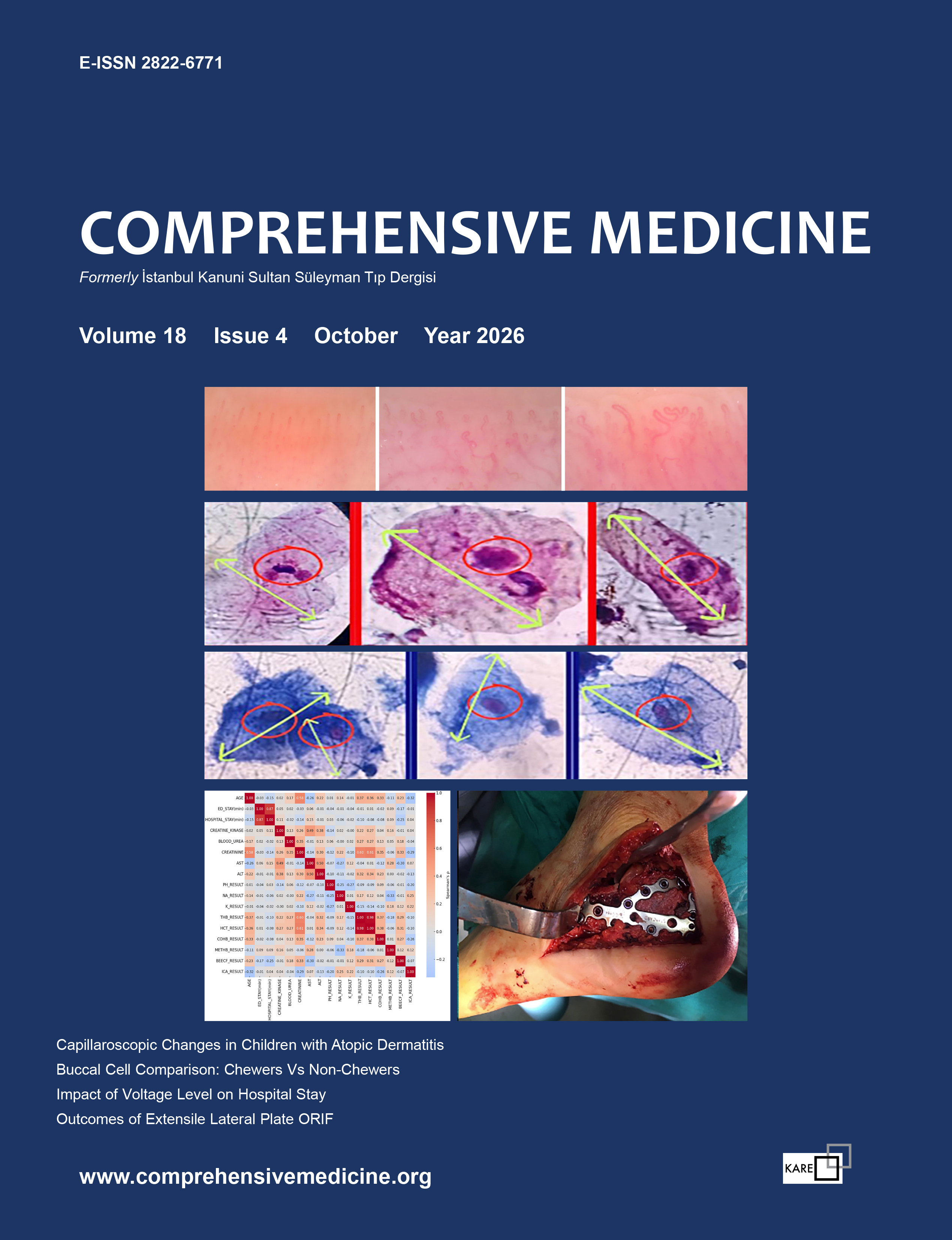
| 7. | Nailfold Videocapillaroscopic Findings in Children with Atopic Dermatitis Çağla Karavaizoğlu, Nadira Nabiyeva Çevik, Ahmet Sert, Turan Güzel, Harbiye Dilek Canat, Kazım Okan Dolu, Figen Çakmak doi: 10.14744/cm.2026.09326 Pages 378 - 383 INTRODUCTION: Atopic dermatitis (AD) is a chronic, relapsing inflammatory skin disorder characterized by skin barrier dysfunction and immune dysregulation. This study aimed to compare nailfold videocapillaroscopic findings between children with AD and healthy controls and to explore associations with disease severity and allergic comorbidities. METHODS: In this single-center, controlled, cross-sectional study, 25 children with AD and 25 healthy controls underwent nailfold videocapil-laroscopic examination. Capillary density, arrangement, dilatation, cross capillaries, tortuosity, abnormal vessels, and microhemorrhages were assessed. A composite capillaroscopy score reflected overall videocapillaroscopic abnormalities. In the AD group, disease severity was evaluated using SCORAD, while allergic comorbidities, including asthma, allergic rhinitis, and food allergy, were recorded. RESULTS: The median ages were 7 years in the AD group and 10 years in the control group (p=0.081). Among children with AD, 36% had mild and 64% had moderate eczema. Allergic comorbidities were significantly more prevalent in the AD group, including asthma (8%), allergic rhinitis (32%), and food allergy (28%) (all p≤0.004). Videocapillaroscopic analysis showed that cross capillaries (60% vs. 12%; p=0.001) and capillary tortuosity (28% vs. 4%; p=0.049) were more frequent in healthy controls. No significant differences were observed in capillary density, apical loop width, or overall abnormality rates (p>0.05). DISCUSSION AND CONCLUSION: Children with AD do not exhibit significant pathological nailfold videocapillaroscopic changes compared with healthy controls. The higher fre-quency of cross capillaries and tortuosity observed in the control group suggests that these findings are not specific to atopic dermatitis. Further studies with larger cohorts are needed to better evaluate the clinical significance of these observations in atopic dermatitis. |
| 8. | Mid-Term Outcomes of Locking Plate Fixation via an Extensile Lateral Approach for Intra-Articular Calcaneal Fractures: A Retrospective Cohort Study Tahir Burak Sarıtaş, Halil Büyükdoğan, Cemil Ertürk doi: 10.14744/cm.2026.79282 Pages 384 - 392 INTRODUCTION: Displaced intra-articular calcaneal fractures are complex injuries, and optimal surgical management remains debated. We evaluated radiographic and clinical outcomes and complications following locking plate fixation via an extensile lateral approach. METHODS: This retrospective cohort study included 59 patients (64 feet) treated between 2015 and 2019. Fractures were classified according to the Sanders criteria on preoperative CT. Outcomes included Böhler and Gissane angles, the AOFAS hindfoot score, the VAS pain score, and complications. Associations with fracture severity, bone grafting, diabetes, and smoking were analyzed using nonparametric and categorical tests, and correlations were assessed using Spearman analysis. RESULTS: The mean age was 41.8±10.9 years, and the mean follow-up was 22.4±8.7 months. Radiographic parameters improved significantly postoperatively (Böhler angle: 3.3° to 23.2°; Gissane angle: 121.9° to 128.9°; both p<0.001). The mean AOFAS and VAS scores were 83.1±9.2 and 2.6±1.8, respectively. Outcomes differed by Sanders type (AOFAS, p=0.021; VAS, p=0.034), with poorer results in type IV fractures. Bone grafting was not associated with AOFAS or VAS scores (p=0.621 and p=0.588, respectively). The overall complication rate was 21.8% (2 cases of osteomyelitis and 12 wound-related complications). Complications were associated with worse clinical outcomes, diabetes increased the risk of complications, and smoking showed a non-significant trend. The postoperative Böhler angle correlated positively with the AOFAS score and negatively with the VAS score. DISCUSSION AND CONCLUSION: Locking plate fixation via an extensile lateral approach achieved significant radiographic restoration with acceptable mid-term clinical outcomes. However, functional recovery and complication burden were strongly influenced by patient risk profile and fracture severity, particularly diabetes and Sanders type IV fractures, whereas bone grafting showed no significant effect on mid-term outcomes. |
| 9. | Baseline LDL-to-Monocyte Ratio as a Prognostic Biomarker in Advanced Inoperable Ovarian Cancer Mert Erciyestepe, Ayşenur Burcu Emetli, İldeniz Bilgiçler Uçar, Ahmet Aydın, Merve Aldıkaçtıoğlu Talmaç, Tolga Çiftpınar, Sabin Göktaş Aydın doi: 10.14744/cm.2026.85688 Pages 393 - 398 INTRODUCTION: Studies have shown that higher levels of peripheral monocytes are associated with poorer survival rates in various advanced cancers, suggesting that they could serve as markers of an immune response that promotes tumor growth. Additionally, modified lipoproteins, particularly oxidized LDL, can directly activate monocytes. These findings highlight a complex interaction in which lipid availability and monocyte-driven inflammation may work together as part of a broader system that promotes tumor progression. METHODS: This retrospective cohort study included patients diagnosed with stage III inoperable or stage IV epithelial ovarian cancer at initial presentation. RESULTS: In the univariate analysis, a lower LDL-to-monocyte ratio (<256.3) was associated with significantly longer PFS compared with a ratio of ≥256.3 (20.4 vs. 11.2 months, p=0.018). In the Cox regression analysis, visceral metastasis (HR: 4.44, 95% CI: 0.79–24.94, p=0.091), stage (HR: 0.89, 95% CI: 0.11–7.25, p=0.913), LDL-to-monocyte ratio (HR: 0.986, 95% CI: 0.971–1.001, p=0.061), and BMI (HR: 0.939, 95% CI: 0.795–1.108, p=0.453) were not identified as indepen-dent prognostic factors for disease-free survival. DISCUSSION AND CONCLUSION: We demonstrated that a lower LDL-to-monocyte ratio was associated with significantly longer progression-free survival in patients with advanced inoperable ovarian cancer. The LDL-to-monocyte ratio, as a noninvasive and easily measurable parameter, can be considered a marker of survival in patients with ovarian cancer; however, larger multicenter studies are needed to confirm these findings. |
| 10. | Independent Predictors of In-Hospital Mortality in Critically Ill Children Receiving Continuous Kidney Replacement Therapy İbrahim Bingöl, Hacer Uçmak doi: 10.14744/cm.2026.27928 Pages 399 - 409 INTRODUCTION: Mortality among critically ill children requiring continuous kidney replacement therapy (CKRT) remains high, yet independent predictors are in-completely defined. The aim of this study was to identify independent predictors of in-hospital mortality and describe outcomes according to CKRT indication groups in a tertiary pediatric intensive care unit (PICU). METHODS: We conducted a retrospective cohort study of children aged 1 month to 18 years who received CKRT in a tertiary PICU between Jan-uary 2024 and January 2026. CKRT indications were classified into four mutually exclusive groups (acute kidney injury [AKI] alone, fluid overload [FO] alone, AKI+FO, and non-renal) according to the WE-ROCK/ESPNIC framework. Multivariable logistic regression with bootstrap validation was performed. RESULTS: The study included 81 patients (median age, 34 months; 55.6% male). In-hospital mortality was 33.3% (27/81). The predominant CKRT indication was FO alone (33.3%), followed by AKI+FO (32.1%), non-renal indications (17.3%), and AKI alone (17.3%). Crude mortality ranged from 25.9% (FO alone) to 42.9% (non-renal; p=0.639). In multivariable analysis, the PRISM III score (aOR 1.30 per point, 95% CI 1.15–1.75, p<0.001), pSOFA score at CKRT initiation (aOR 1.43 per point, 95% CI 1.22–1.90, p<0.001), and FO>10% (aOR 3.35, 95% CI 1.36–8.46, p=0.012) were independent predictors of mortality. The model demonstrated high discrimination (AUROC 0.929; 95% bootstrap CI 0.905–0.929; optimism-corrected AUROC 0.920) and good calibration (Hosmer–Lemeshow p=0.918). DISCUSSION AND CONCLUSION: Three readily available bedside variables—PRISM III, pSOFA, and fluid overload >10%—demonstrated high discriminative performance for in-hospital mortality in critically ill children receiving CKRT, supporting their potential use as a mortality risk stratification tool pending prospective multi-center validation. |
| 11. | Aeroallergen Sensitization Patterns in a Tertiary Allergy Center on the Anatolian Side of İstanbul İlkim Deniz Toprak, Hicran Yaman doi: 10.14744/cm.2026.06977 Pages 410 - 416 INTRODUCTION: This study aimed to investigate the distribution and seasonal variability of perennial and seasonal aeroallergen sensitization among adult patients presenting to a tertiary allergy clinic in Umraniye, Istanbul, and to compare the demographic and laboratory characteristics of sensitized patient groups. METHODS: Retrospective single-center study evaluating aeroallergen sensitization patterns using skin prick and specific-IgE testing.a RESULTS: A total of 845 patients were evaluated for aeroallergen sensitization, of whom 462 residing in the Umraniye district were included in the final analysis. The median age was 42 years (IQR 31–52), and 79.2% were female. Aeroallergen sensitization was detected in 204 patients (44.2%), whereas 55.8% showed no sensitization. Among sensitized individuals, 48% demonstrated sensitization only to perennial aeroallergens, 25% only to seasonal aeroallergens, and 27% to both perennial and seasonal allergens. House dust mites were the predominant perennial allergens, with sensitization to Dermatophagoides farinae and Dermato-phagoides pteronyssinus observed in 26.2% and 24.9% of patients, respectively. Grass and cereal pollens were the leading seasonal allergens. Significant seasonal differences in skin prick test positivity were identified for tree and grass pollens, with higher rates of tree pollen sensitization in spring and grass pollen sensiti-zation in summer. Patients with combined perennial and seasonal sensitization were significantly younger than those without combined sensitization (p=0.033). DISCUSSION AND CONCLUSION: In this cohort, house dust mites were the leading aeroallergens, while pollen sensitization patterns varied significantly according to the season of presentation. Tree pollens predominated in spring and grass/cereal pollens in summer. These findings emphasize the importance of region-specific evaluation of aeroallergen sensitization patterns in populations with diverse environmental exposures. |
| 12. | Robotic Versus Open Kidney Transplantation: A Single-Center Comparative Study of Operative Outcomes and Renal Function Zeki Toprak, Eyüp Veli Küçük doi: 10.14744/cm.2026.42104 Pages 417 - 423 INTRODUCTION: Robotic kidney transplantation (RKT) has emerged as a minimally invasive alternative to conventional open kidney transplantation (OKT). Although ro-botic surgery may reduce surgical trauma and improve perioperative recovery, comparative evidence between robotic and open approaches remains limited. This study aimed to compare operative characteristics, postoperative complications, and renal function trajectories between RKT and OKT in a single-center cohort. METHODS: This retrospective observational study included adult patients who underwent kidney transplantation at a tertiary transplant center. Patients were categorized according to the surgical approach as OKT or RKT. Baseline characteristics, operative parameters, postoperative complications, and renal function outcomes were analyzed. Renal function was assessed using serum creatinine and estimated glomerular filtration rate (eGFR) at predefined postoperative time points for up to 1 year. Continuous variables were compared using the Mann–Whitney U test, and categorical variables were analyzed using Fisher’s exact test. RESULTS: A total of 27 kidney transplant recipients were included, of whom 20 underwent OKT and 7 underwent RKT. Baseline characteristics were comparable between the groups. Robotic transplantation was associated with significantly longer operative and warm ischemia times, whereas estimated intraoperative blood loss was lower in the robotic group. Early postoperative renal recovery appeared slower in robotic recipients, with higher creatinine levels and lower eGFR on postoperative day 3. However, these differences diminished during follow-up, and renal function became comparable between the groups by postop-erative day 30 and remained similar thereafter. DISCUSSION AND CONCLUSION: Robotic kidney transplantation appears feasible and provides medium-term graft function comparable to that of open transplantation. |
| 13. | Evaluation of Artificial Intelligence Chatbots for Preoperative Counseling in Patients with Neurological Disorders Ceyhan Oflezer, Mert Göbel doi: 10.14744/cm.2026.68916 Pages 424 - 430 INTRODUCTION: The quality of information provided to patients with neurological disorders using large language model (LLM)-based artificial intelligence (AI) chatbots has not been sufficiently investigated. The aim of this study was to evaluate and compare the quality of responses generated by ChatGPT, Google Gemini, and Microsoft Copilot to frequently asked preoperative questions from patients with neurological disorders. METHODS: Twenty frequently asked preoperative questions were identified across four neurological disorders: multiple sclerosis (MS), epilepsy, Parkinson’s disease, and dementia. Each question was submitted to ChatGPT, Gemini, and Copilot using identical prompts in newly initiated sessions. Responses were eval-uated in a blinded manner by a panel of eight neurologists and two anesthesiologists. Clinical accuracy, safety, and adequacy were assessed using a 5-point Likert scale. Inter-rater agreement was assessed using the intraclass correlation coefficient (ICC). RESULTS: ChatGPT achieved the highest overall scores across all disease groups. Significant differences were observed among chatbots in the overall analysis (χ²(2)=40.635, p<0.001, Kendall’s W=0.423). Post-hoc analyses demonstrated that ChatGPT significantly outperformed both Gemini (r=0.705, p<0.001) and Copilot (r=0.747, p<0.001), whereas no significant difference was found between Gemini and Copilot (p=0.876). The lowest scores for all chatbots were observed in the MS group. Overall inter-rater agreement was moderate (ICC=0.571; 95% CI, 0.411–0.712). No response was classified as potentially harmful or misleading. DISCUSSION AND CONCLUSION: All three AI chatbots provided generally high-quality responses to questions from patients with neurological disorders. ChatGPT demonstrated superior performance compared with Gemini and Copilot. Although these tools may support patient education, they should complement rather than replace physician-guided counseling. |
| 14. | Epidemiologic and Histopathologic Features of Brain Tumors: A Two-Year Experience from a Single Center Umut Çelik, Akın Öztürk, Abdurrahim Tekin doi: 10.14744/cm.2026.25238 Pages 431 - 435 INTRODUCTION: This study aimed to evaluate the demographic, anatomical, and histopathological characteristics of intracranial brain tumors surgically treated at our institution and to compare the results with previously published literature. METHODS: In this retrospective single-center study, data from 143 patients who underwent surgical treatment for intracranial brain tumors at the Neurosurgery Clinic of Kanuni Sultan Süleyman Training and Research Hospital between January 1, 2024, and December 31, 2025, were analyzed. Patient age, sex, comorbidities, tumor location, tumor size, and histopathological diagnoses were evaluated. Descriptive statistical methods were used for the analysis. RESULTS: Of the patients, 83 (58%) were male and 60 (42%) were female, with a mean age of 62±8.75 years. Tumors were located supratentorially in 83.9% of cases and infratentorially in 16.1%. Metastasis was the most common tumor type (30%). Among primary tumors, meningioma was the most frequent (26.5%), while glioblastoma was the most common primary malignant tumor (22.3%). Pediatric patients accounted for 6.3% of the cohort, with pilocytic astrocytoma and glioblastoma being the most prominent diagnoses in this group. DISCUSSION AND CONCLUSION: The findings of our study demonstrate that the demographic and histopathological distribution of intracranial brain tumors is largely consistent with the existing literature. The high prevalence of metastatic tumors and glioblastomas underscores their clinical significance in the adult population. Fur-ther large-scale, multicenter studies are warranted to validate and expand upon these findings. |
| 15. | Bibliometric Analysis of Scoliosis-Related Postgraduate Theses in Türkiye: Research Trends, Methodological Characteristics, and Publication Outcomes Demet Ferahman, İremsu Yalçın Güler doi: 10.14744/cm.2026.87004 Pages 436 - 444 INTRODUCTION: Scoliosis-related publications have increased, but postgraduate theses remain underexamined in Türkiye. This study analyzed scoliosis-related theses regarding trends, methodological characteristics, outcomes, and implications for physical medicine and rehabilitation (PM&R). METHODS: This retrospective bibliometric study included open-access postgraduate theses on scoliosis registered in the National Thesis Center of the Council of Higher Education in Türkiye between January 1, 2000, and December 31, 2025. Theses containing the Turkish term “skolyoz” in the thesis title field were screened. Thesis type, author discipline, scoliosis subtype, study design, intervention type, publication status, journal index, and methodological/reporting quality were recorded. RESULTS: A total of 249 theses were included. More than half were completed between 2020 and 2025 (57.0%, n=142), with an increase after 2018. Adolescent idiopathic scoliosis was the most frequent subtype (75.1%, n=187). Medical specialty theses constituted the largest group, and nearly half were authored by medical doctors. Physician-authored theses were concentrated in orthopedics, whereas PM&R contributed less. Exercise was the most frequent intervention. Overall, 36.1% were published, and 57.8% of published studies appeared in SCI/SCI-E indexed journals. Observational theses had lower publication likelihood than interventional theses (OR=0.36, 95% CI: 0.18–0.71, p=0.003), while master’s theses were less likely to be published than doctoral theses (OR=0.28, 95% CI: 0.11–0.69, p=0.006). DISCUSSION AND CONCLUSION: Thesis production has increased but remains concentrated on adolescent idiopathic scoliosis, orthopedic perspectives, and observational designs. Despite exercise and bracing in conservative care, physician-authored theses from PM&R are underrepresented. Future studies should prioritize interventional designs and patient-centered outcomes. |
| 16. | Hemoglobin Recovery as a Surrogate Marker for Treatment Response in T-Cell Large Granular Lymphocytic Leukemia: A Real-World Experience Regarding Splenomegaly Tuba Güllü Koca, Fazıl Çağrı Hunutlu, Ahmet Mert Yanık, Sinem Çubukçu, Nizameddin Koca, Tuba Ersal, Vildan Gürsoy, İbrahim Ethem Pınar, Vildan Özkocaman, Fahir Özkalemkaş doi: 10.14744/cm.2026.33603 Pages 445 - 452 INTRODUCTION: T-cell large granular lymphocytic leukemia (T-LGLL) is a rare indolent lymphoproliferative disorder associated with cytopenia and autoimmune conditions, for which predictors of treatment response remain poorly defined. We describe clinical characteristics, hematologic trends, and predictors of first-line treatment failure. METHODS: Sixteen patients diagnosed between November 2018 and May 2025 were analyzed retrospectively. Hematologic parameters at base-line and last follow-up were compared with the Wilcoxon signed-rank test. Patients receiving active therapy were grouped by first-line treatment failure, defined as a switch from the first-line agent because of inadequate hematologic response, and compared with the Mann-Whitney U test. Event-free survival was estimated by the Kaplan-Meier method and compared by the log-rank test. RESULTS: Twelve patients (75%) were female; median age was 60.5 years. Hemoglobin increased from 10±3 to 12±2 g/dL (p=0.023). Changes in WBC and ANC differed between refractory and non-refractory treated patients (p=0.048 for both). First-line treatment was cyclophosphamide (44%), methotrexate (31%), or observation (25%); 4 of 12 treated patients (33%) switched therapy. Median follow-up was 19 months. Median event-free survival was 4 months with splenomegaly versus 72 months without (p=0.144, log-rank), and splenomegaly was not significantly associated with treatment failure (Fisher exact p=0.245). DISCUSSION AND CONCLUSION: Where molecular stratification such as STAT3 analysis is unavailable, hemoglobin recovery may be an accessible surrogate marker of treatment efficacy, whereas splenomegaly may flag patients at higher risk of first-line treatment failure. Given the small cohort, these observations are hypothesis-generating. |